FREE delivery & 40% Discount for next 3 orders! Place your 1st order in.

Soon stocks will run out
Dont miss this opportunity while supplies last.



Soon stocks will run out
Dont miss this opportunity while supplies last.


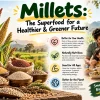
Millets: The Superfood for a Healthier & Greener Future
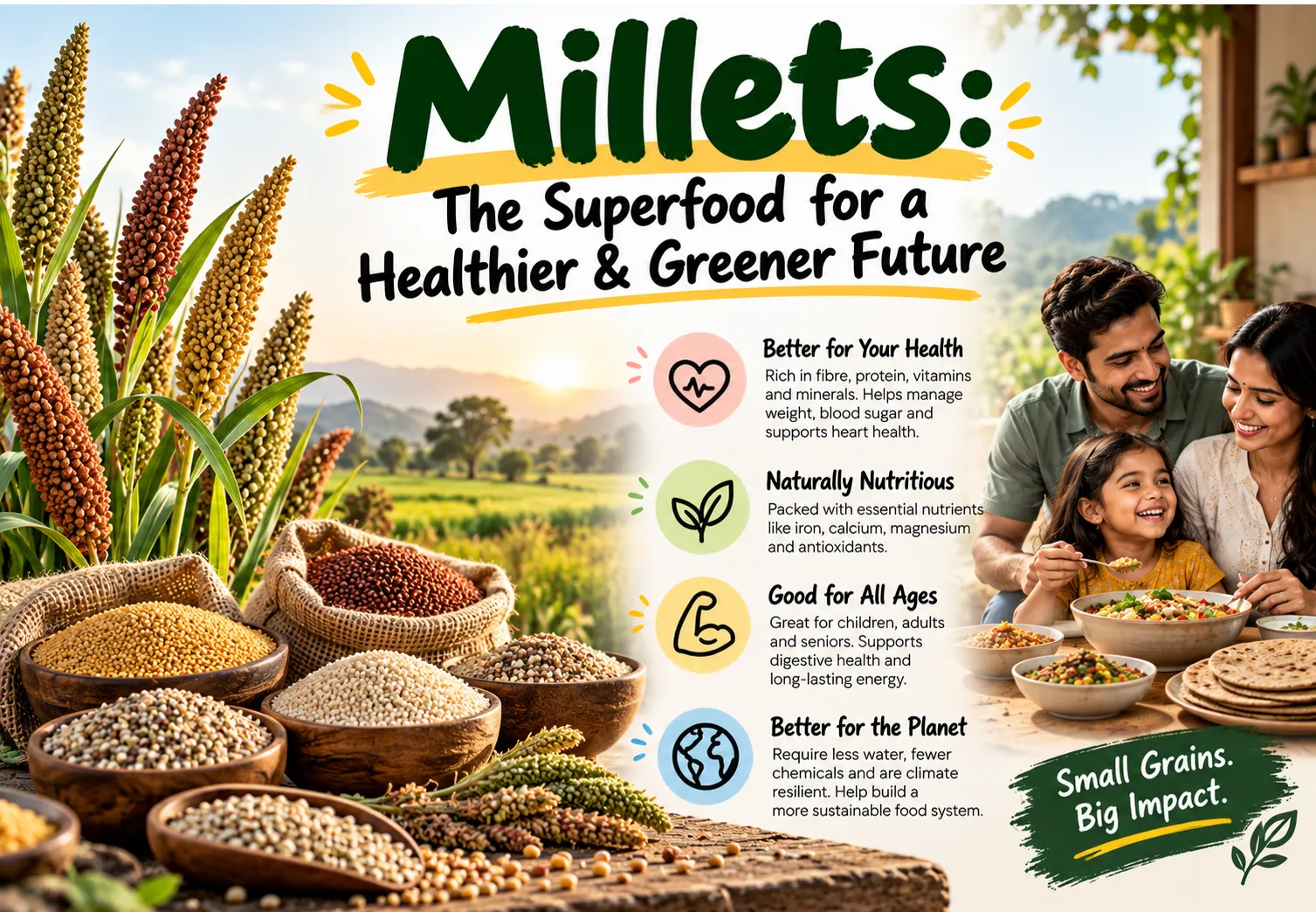
Millets are small, nutrient-rich grains that have been part of traditional diets in India for centuries. Today, these traditional grains are gaining renewed attention because they combine nutritional value, versatility, and agricultural resilience.
From breakfast porridge and rotis to dosa, khichdi, noodles and snacks, millets can easily become part of modern everyday meals.
Why Are Millets Called a Superfood?
Millets provide a variety of important nutrients, including dietary fibre, protein, minerals and other micronutrients. Their nutritional profile varies depending on the type of millet, but they can be a valuable addition to a balanced diet.
Popular varieties include Foxtail Millet, Little Millet, Kodo Millet, Barnyard Millet, Browntop Millet, Pearl Millet (Bajra), Sorghum (Jowar) and Finger Millet (Ragi).
Their variety makes it easy to choose different grains for different meals while adding diversity to your diet.
Rich in Dietary Fibre
Many millet varieties contain significant amounts of dietary fibre. Fibre is important for normal digestive function and can help contribute to a feeling of fullness after meals.
Replacing some refined grain products with whole, minimally processed millet foods can be one way to increase whole-grain variety in your diet.
A Naturally Gluten-Free Grain
Millets are naturally gluten-free, making them useful for people who need or prefer gluten-free grains.
However, people with coeliac disease or medically diagnosed gluten sensitivity should also consider the possibility of cross-contamination during processing and choose appropriately certified products when necessary.
Supporting Balanced Eating
Millets can be part of a balanced eating pattern because they provide carbohydrates along with fibre and other nutrients.
Some millet varieties and millet-based meals can have a relatively lower glycaemic response than refined grain foods, although the effect depends on the specific millet, processing method, cooking method and the complete meal.
They should therefore be viewed as one nutritious food choice, rather than as a treatment for diabetes or any other medical condition.
Millets as Future Food for Humanity
The world’s food systems face growing challenges from population growth, changing diets, water availability, and climate variability.
This is where traditional crops such as millets can play an important role.
Millets are generally hardy crops that can perform well in relatively dry and challenging growing conditions. Several millet varieties require less water than some major cereal crops, although exact water requirements vary according to the crop, soil, climate, and farming practices.
Their ability to grow in diverse conditions makes them an interesting crop for building more resilient food systems.
Millets and the Environment
Food choices are connected to agriculture and the environment. Millets can offer several agricultural advantages.
Less Dependence on Water
Many millet crops are comparatively drought-tolerant and can grow with lower water requirements than some water-intensive cereal production systems.
This can be particularly valuable in regions where water resources are limited.
Resilient Crops
Millets can tolerate challenging growing conditions and are cultivated across different climates. Their resilience can help farmers diversify crops instead of depending heavily on a small number of staple grains.
Supporting Crop Diversity
Growing a wider range of crops can contribute to agricultural biodiversity. Millet cultivation also helps preserve traditional crop varieties, farming knowledge, and food traditions.
Better Use of Marginal Lands
Some millet varieties can grow in soils and conditions where other major cereal crops may be more difficult to cultivate. This makes them useful in certain dryland farming systems.
Of course, the environmental impact of any food depends on the complete farming and supply chain system, including irrigation, fertiliser use, processing, transportation, and land management.
Millets in Modern Kitchens
One of the biggest advantages of millets is their versatility.
You can enjoy them as:
- Millet Roti
- Millet Dosa
- Millet Khichdi
- Millet Porridge
- Millet Upma
- Millet Salads
- Millet Noodles
- Millet Biscuits and Baked Foods
- Millet Namkeen
- Millet Flour for everyday cooking
This flexibility makes it easier to introduce traditional grains into modern lifestyles.
Bringing Traditional Grains Back to the Table
Millets are not a new trend. They have been grown and eaten in India for generations.
What is changing today is the way we understand and use them. Modern consumers are increasingly interested in whole grains, diverse diets, traditional foods, and more sustainable agricultural systems.
Bringing millets back into everyday meals connects traditional Indian food knowledge with modern nutritional and environmental awareness.
A Better Future Starts With Better Food Choices
Millets alone cannot solve the world’s nutritional or environmental challenges. However, they can be an important part of the solution.
They offer nutritional diversity for people, crop diversity for farmers and potential resilience for food systems.
Choosing millets more often can also encourage demand for traditional grains and support farmers who grow these valuable crops.
Small Grains. Big Impact.
At Amruta Goods, we believe traditional grains deserve a place in the modern kitchen. Our range of millets is selected for people who want to explore wholesome, versatile, and traditional food choices.
Eat diverse. Choose wisely. Support sustainable food choices.
Amruta Goods — Pure • Natural • Organic
Call / WhatsApp: 82 888 13 66
Shop Online: amrutagoods.com